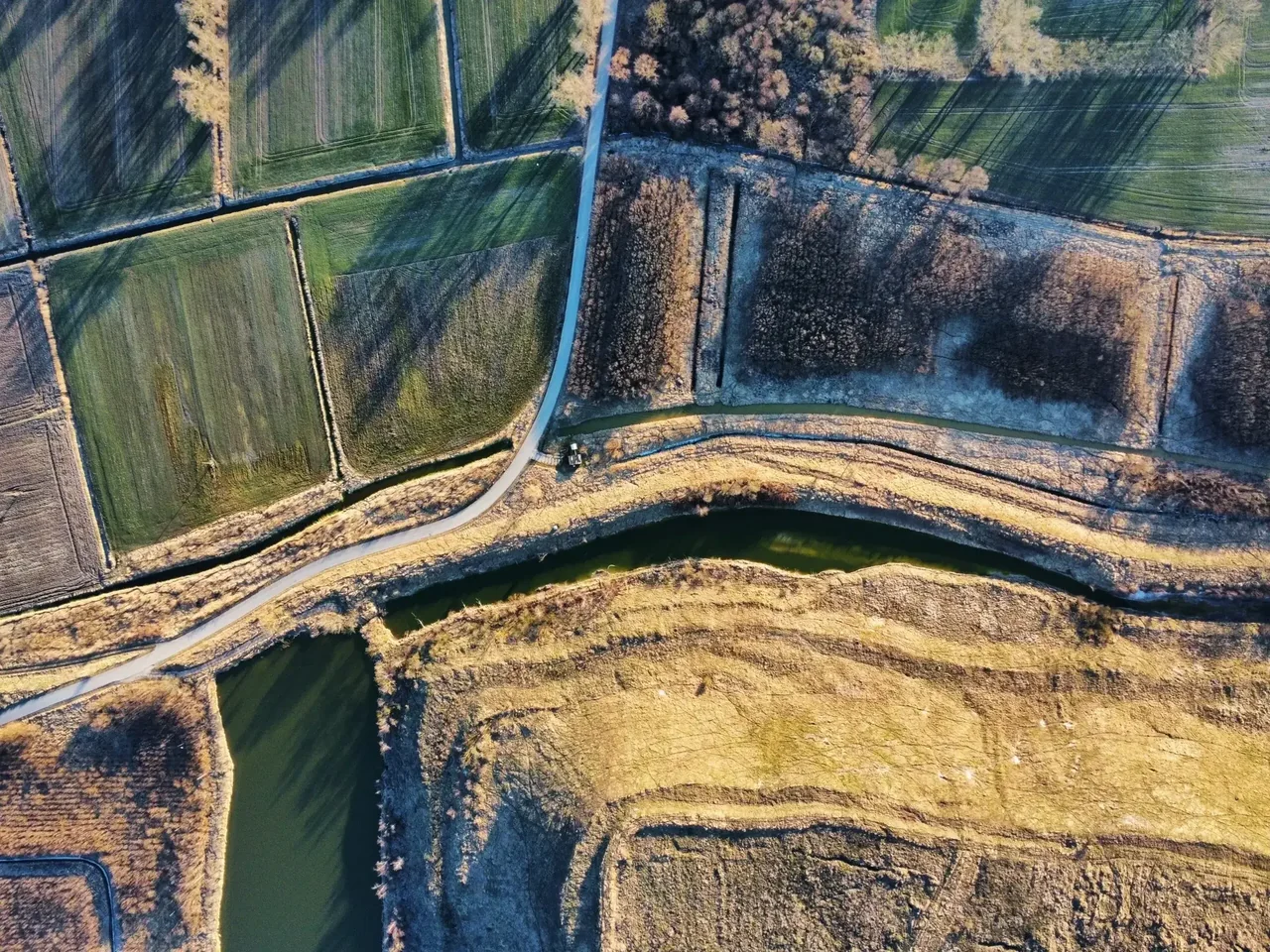

Local drone surveys in Fulham, planned around the site and the airspace.
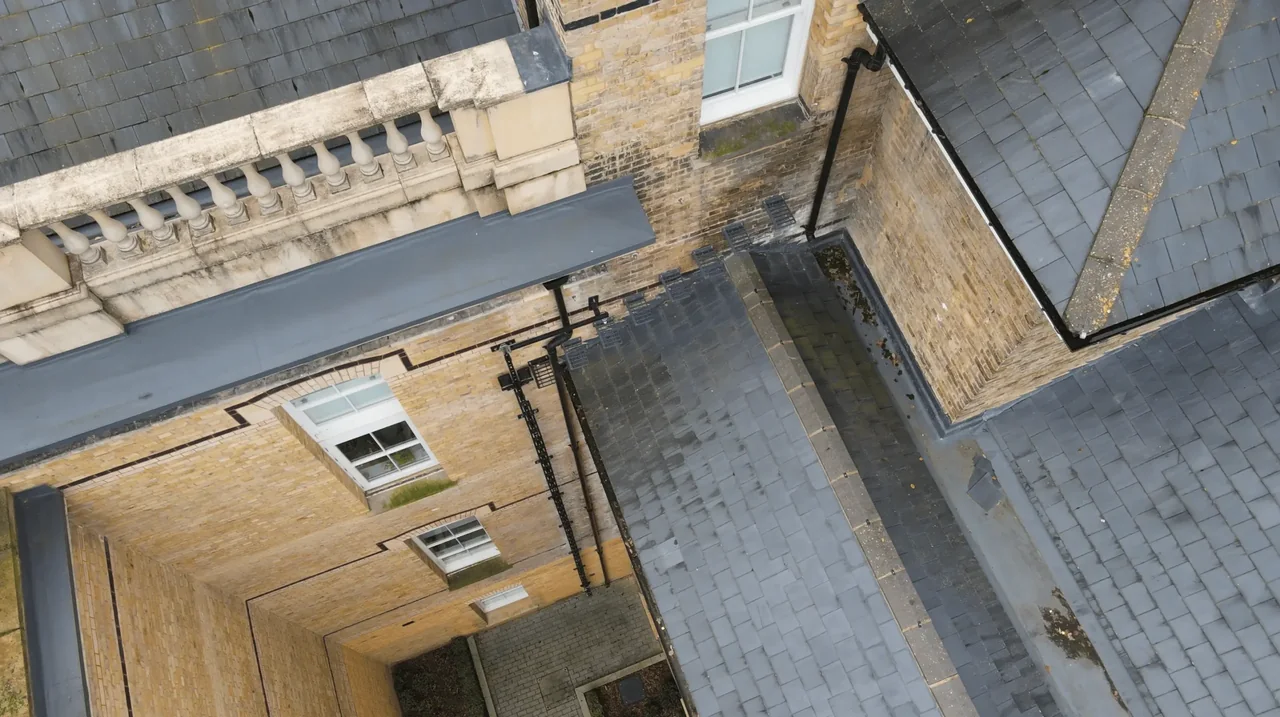
Almost all of SW6 went up in one speculative burst between about 1880 and 1910, which is why Fulham has such a consistent — and consistently misunderstood — roof problem. Behind the street-facing parapets sit hidden M-shaped valley roofs draining into a single central gutter, invisible from the pavement and from the top of a ladder. When one blocks, the water goes into the party wall rather than off the front. That is most of our Fulham workload. The rest is the other Fulham: the terracotta-lion gables of the Peterborough Estate, the stucco and brick around Parsons Green and Hurlingham, and the tall riverside blocks at Imperial Wharf and Sands End, where cladding, sealant and balcony condition are the live questions.
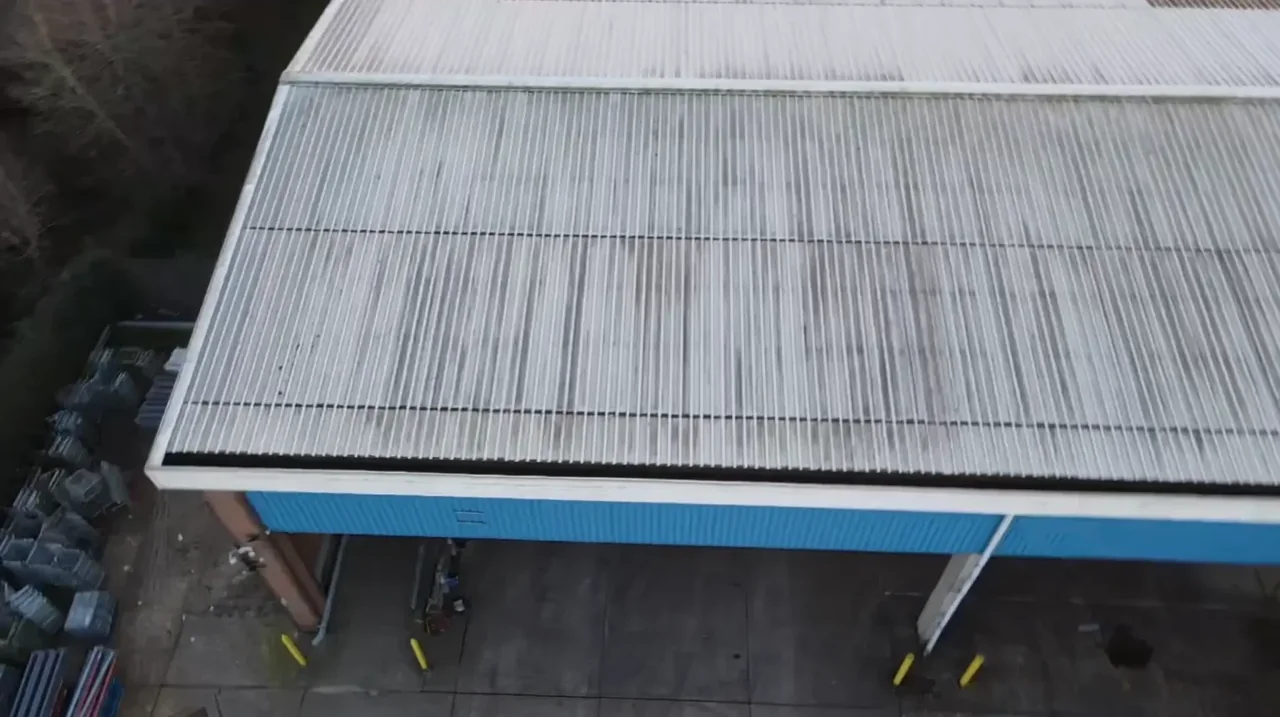
The buildings and sites we survey in Fulham
Fulham is dominated by late-Victorian and Edwardian two- and three-storey terraces in London stock brick with slate roofs and butterfly valleys behind parapets. The Peterborough Estate, south of New Kings Road, is red brick with the terracotta lions on the gables that give the Lion Houses their name. Conservation areas include Peterborough Estate, Parsons Green, Hurlingham, Sands End and Fulham Reach, alongside Grade I listed Fulham Palace and Bishop's Park. Sands End is the outlier: former gasworks and industrial land now carrying Imperial Wharf and the Chelsea Harbour fringe, where the survey subject is a modern high-rise envelope rather than a period roof.
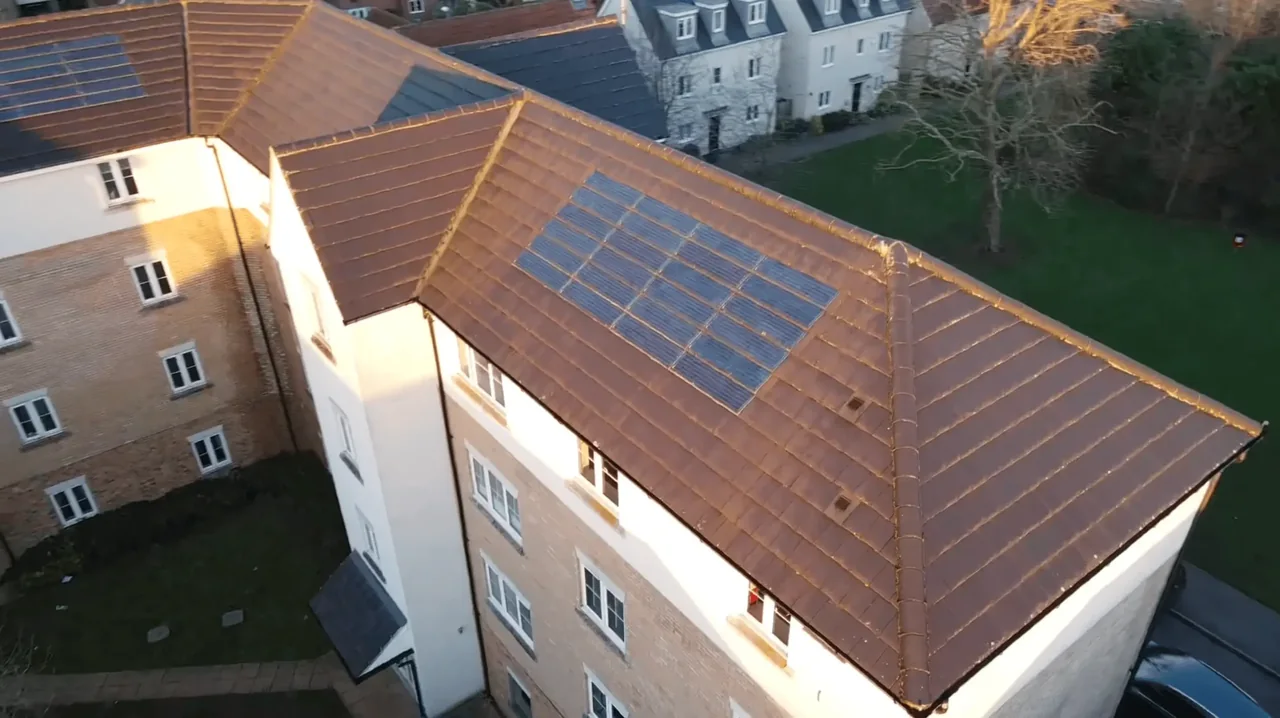
What we get asked for in Fulham
Surveys we fly in Fulham
Every survey is scoped to your project before we fly — you receive the outputs that are actually useful to you, and a clear, no-obligation quote first.
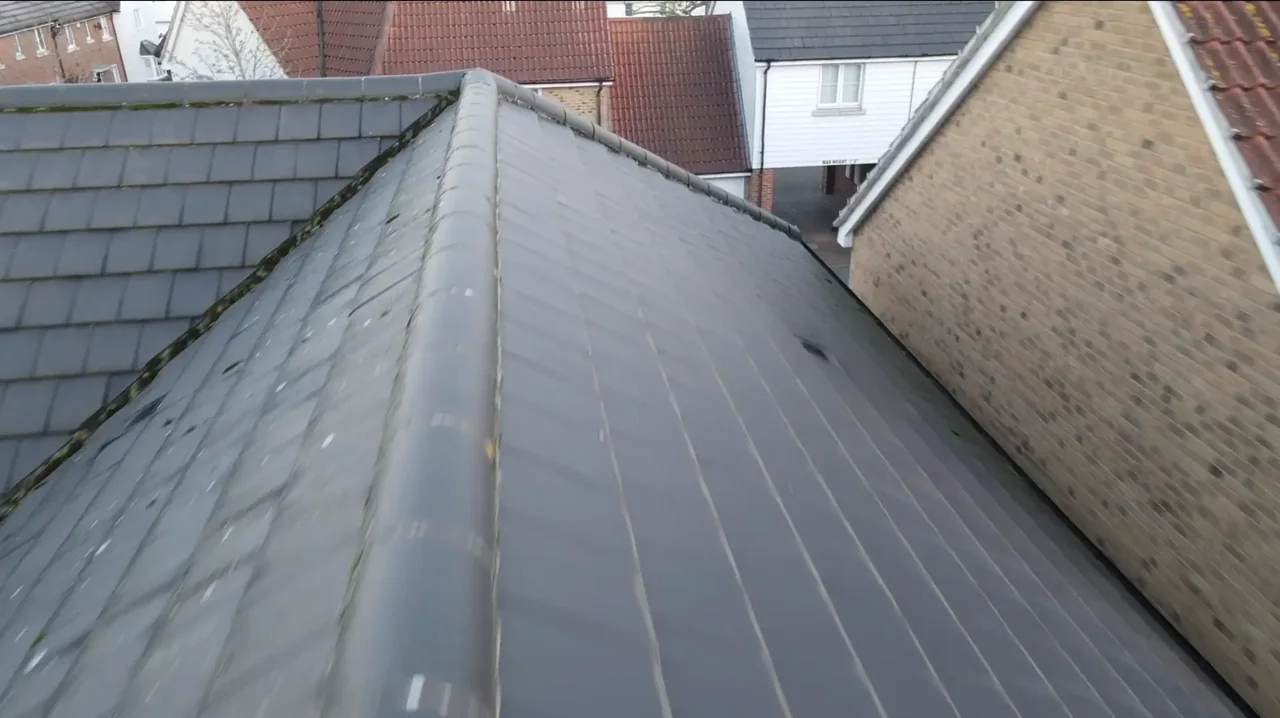

Drone surveys in Fulham — frequently asked questions
Why can't my roofer just tell me what's wrong with a Fulham butterfly roof?
Because the interesting part is behind the parapet. On a typical SW6 terrace the two pitches fall inwards to a central valley gutter that is invisible from the street and awkward and unsafe to reach from a ladder. A drone gets directly above it and captures the gutter run, the flashings, the parapet copings and the party-wall junctions in high resolution — so the diagnosis comes before the scaffold quote rather than after it.
Is Fulham inside a drone restriction zone?
The answer depends on the exact address in Fulham, the current airspace restrictions and the proposed flight. Proximity to an airport or a place name alone does not establish whether a flight is possible. We review access, people and activity nearby, current airspace information and the operating limits that apply to the proposed work. Any required permissions must be obtained, and suitable weather is needed on the day. We confirm feasibility and the scope we can capture before booking; if the flight cannot be carried out safely and lawfully, we discuss an alternative or decline the work.
Can you survey a flat in a block, or only whole buildings?
Both, but the permission differs. For a single flat we normally need the freeholder or managing agent to consent to the flight, because the roof and elevations we are capturing are common parts. In practice a lot of our Imperial Wharf and Sands End work comes from managing agents directly, covering the whole envelope in one visit and giving every leaseholder the same imagery.
How much of the street will notice, and do I need to warn neighbours?
Less than you would expect. A Fulham roof survey is usually a single visit of under an hour with the operator on the ground and no scaffolding, ladders or parking suspension. We do brief neighbours when the flight path crosses their garden or the launch point sits close to their boundary — it is good practice and it removes the awkward conversation afterwards. Imagery and report normally follow within a few days.
We also cover, near Fulham
Based in North Weald, Epping and covering London, Essex, Hertfordshire, Kent and the wider South East. If your site is not listed, check we cover it →