
Thermal imaging for buildings: uses, limits and booking questions
Updated · London Drone Surveys
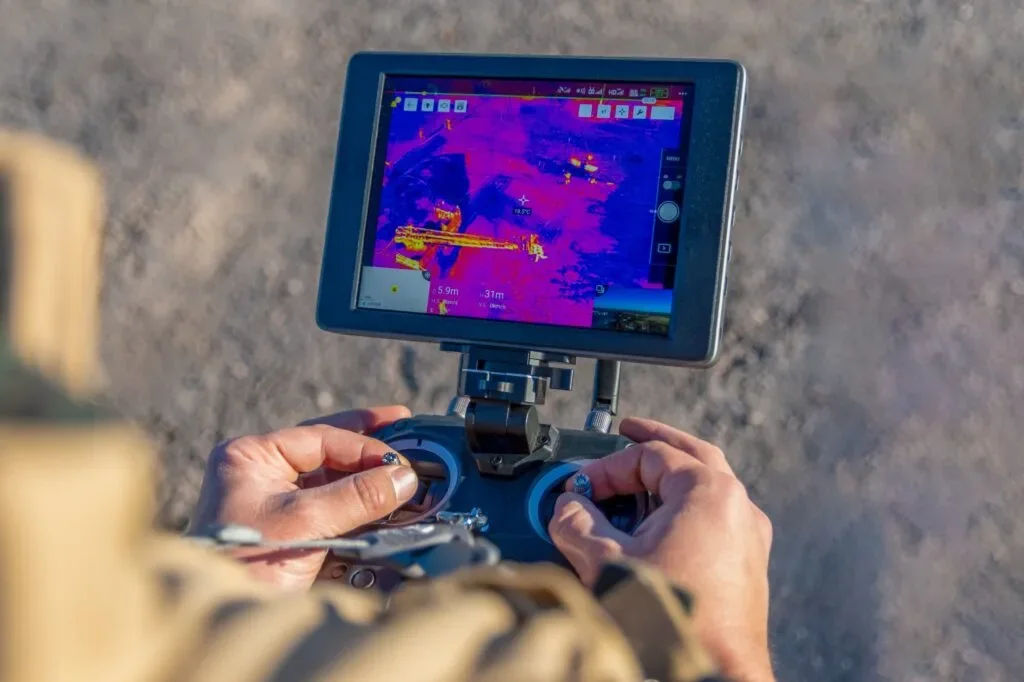
Thermal imagery can guide a building investigation, but a temperature pattern is not a diagnosis. Learn what to ask before commissioning a survey.
What a thermal image actually shows
A thermal camera detects infrared radiation and displays patterns associated with surface temperatures. It does not see through a wall or roof covering. A temperature pattern on the surface may help an investigation into insulation, moisture or another issue, but it needs interpretation in the context of the building.
Glass and shiny metal can reflect infrared radiation, which complicates the picture. A bright patch should not automatically be treated as a defect. Camera manufacturer FLIR explains these limits in its guide to what thermal cameras can see.
Moisture indications need confirmation
Thermal imaging can help locate a pattern that warrants further investigation. However, a temperature difference is not proof that water is present, and it does not by itself identify the route of a leak. Other materials and conditions can produce differences too.
FLIR advises confirming suspected moisture with a moisture meter rather than treating a thermal pattern as a complete diagnosis. The follow-up method should be agreed with the person investigating the building. Read FLIR's moisture-detection guidance.
Conditions and equipment matter
The camera, viewing distance and site conditions affect what can be recorded. Fog and rain can reduce thermal-camera range and image contrast. A plan that works for one building or inspection question may not suit another. FLIR explains the effects of fog and rain.
Using a drone also requires a suitable and permitted flight. Before booking aerial capture, the operator needs the exact location so current airspace restrictions and practical access can be checked. Read the CAA's airspace guidance.
Questions to ask before commissioning a thermal survey
Start with the outcome you need rather than choosing a camera first. Ask the proposed provider:
- Is thermal imaging appropriate for this building and the suspected problem?
- What camera and capture method will be used, and who will interpret the results?
- What conditions are required, and what happens if the visit needs to be rescheduled?
- Will ordinary photographs accompany thermal images so the locations are clear?
- Will the report distinguish observations from suspected causes, and state the follow-up checks needed?
Choose the inspection that answers your question
If your concern is visible roof damage, the first useful step may be a conventional drone roof inspection. Thermal capture requires different equipment and interpretation. Describe the building and the decision you need to make when you contact London Drone Surveys; confirm thermal availability, the proposed specialist and the report scope before booking.
This guide explains the technology. Thermal capture is not automatically included in a standard drone survey quote.
Related services
Drone roof surveys · Building and facade surveys · Areas we cover
Discuss the inspection you need
Tell us about the property and the question you want answered so we can discuss the appropriate inspection scope.
Request a survey quote