
Drone roof inspections: what you get and what to check
Updated · London Drone Surveys
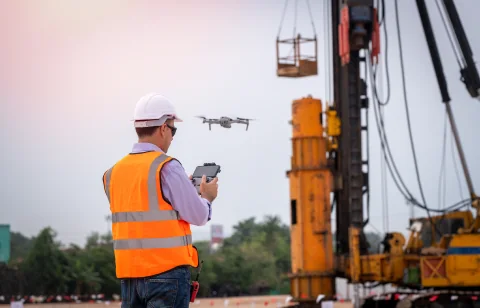
A practical guide to aerial roof inspections: what the images can show, what remains unseen, and how to agree a useful report before booking.
What a drone roof inspection can show
A drone camera can provide views of roof coverings, ridges, valleys, chimneys, flashing and gutters that are difficult to see from the ground. Those images can help you discuss a suspected defect with a roofer, surveyor or property manager. The useful starting point is the question you want answered: where a leak may be entering, what visible storm damage needs attention, or what a buyer's surveyor could not see.
Where access and conditions allow, the inspection records an overview of the roof and closer views of areas of concern. It is an external visual inspection. Trees, roof geometry and surrounding buildings can hide parts of the roof, and the report should identify any gaps.
A useful alternative to access equipment
Capturing images remotely can avoid sending a person onto a roof simply to look at it. HSE's roof-work guidance includes drone and mast photography among the options to consider when only a visual inspection is needed. That does not remove the need to plan the flight or assess site risks. Read HSE's guidance on roof work.
What it cannot tell you
Photographs do not reveal everything beneath tiles or inside a roof build-up. They do not replace opening-up work, moisture testing or a structural assessment where those are needed. A visible defect may help an investigation, but a photograph alone cannot always establish the cause of an internal leak.
If a lender, insurer or surveyor has requested a particular report, share that request before booking. Agree who needs to interpret the images and whether an appropriately qualified professional must provide the assessment. A drone flight alone does not guarantee that a third party will accept the resulting report.
Agree the output before the visit
Decide what you need to hand to the next person. A collection of photographs and an annotated condition report are different deliverables. For a roof inspection, a useful scope can include:
- An overview identifying the property and the roof areas inspected.
- Clear still images, with close-ups of visible defects or points needing further investigation.
- A written or annotated report if agreed, linking observations to the relevant images.
- The inspection date, any areas that could not be seen, and the agreed delivery format and timing.
How to prepare for a quote
Send the property address or postcode, the type of building, your concern and any deadline. Mention access restrictions, shared courtyards or known obstacles. If you already have a surveyor's request or photographs of an internal leak, explain what they show when you enquire.
Airspace restrictions and the circumstances at the property must be checked before a flight. The CAA explains how to check current restrictions; being within a service area is not a guarantee that every flight can proceed. Weather can also affect the booking. Read the CAA's airspace guidance.
Compare quotes by scope
Check which roof areas, images and report are included; whether video is useful; who interprets the findings; and how access, permissions or a changed brief affect the quote. Ask for the agreed scope and delivery date before confirming. Our roof survey service page explains the outputs we discuss with customers across London and Essex.
Related services
Drone roof surveys · Building and facade surveys · Areas we cover
Need a closer look at your roof?
Send the property address, what you need to find out and your deadline. We will review the scope and provide a no-obligation quote.
Request a survey quote